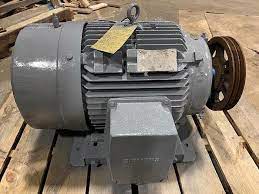
Purchasing new industrial electric motors is a significant investment. However, the best option may not always be a brand new motor. There are many reasons why a surplus or used electric motor might be the right choice. These include:
Whether you are replacing a hard-to-find older motor or simply looking to lower your overhead, purchasing surplus is a smart move. Many refurbished electric motors from HGR come with warranties that rival or even exceed those of new builds, giving you peace of mind for your investment.
While it’s possible to extend the life of any electric motor, if you want to ensure your plant runs smoothly, implement a maintenance strategy that supports predictive diagnostics and preventive repairs. Having a process in place to support your engineers and technicians will not only reduce downtime, but also the domino effects of unplanned events on production and profitability. When deciding to repair or replace, consider the extent of the failure, costs (including repair, replacement and downtime), and energy consumption. A quality repair vendor who follows prescribed best practices will preserve a motor’s reliability and extend its MTBF. Otherwise, you may reach a point where the cost to repair is greater than a new premium high efficiency motor.
A major factor in deciding whether to repair or replace a motor is the cost. In many cases, it is more financially prudent to repair an existing motor than to buy a new one. However, this decision is heavily dependent on who does the repairs and how they are done. There are several factors that should be taken into account before selecting a repair vendor, including hourly rates, how long the job takes to complete and other factors. Generally speaking, properly performed repairs will not significantly affect a motor’s efficiency. This is due to the fact that best practices for rewinding do not change core, winding (I2R), or friction losses. Some stray losses may occur if the laminations are damaged, but this can be avoided by using a rotor with identical permeability, and the removal of entire laminations should be avoided unless necessary for safety reasons. The best way to reduce stray loss is to keep your spare motors in an environmentally-controlled storage facility.
If the rewind process is handled carefully by a knowledgeable and experienced repair shop, motor reliability can be improved. However, this is not always the case. In fact, poor quality repairs can decrease motor life, rather than increase it. This is a significant concern in petrochemical facilities where large quantities of water and chemicals are involved. Motors are subjected to extreme environmental stresses, including vibration, high temperatures and electromagnetic field interference. The best way to predict a motor’s reliability is to analyze its failure history. In order to do this, a comprehensive failure databank is required. A survey of facility maintenance records, maintenance plans and work orders was performed to collect this data.
This led to a well-documented failure bank of over 300 motors. This was supplemented with additional industry research. The most prevalent failure modes and apparent causes were identified. These results were used to develop a competing risk failure model that is useful for predicting overall motor reliability. Click here or explore our official site to access premium industrial electric motors.