Introduction
Launching an ICO in today’s market is no longer about raising capital as quickly as possible. That approach may have worked during the early surge of token offerings, but the market has matured, and expectations have shifted. Investors, users, and regulators now look for structure, clarity, and long-term viability before committing attention or capital.
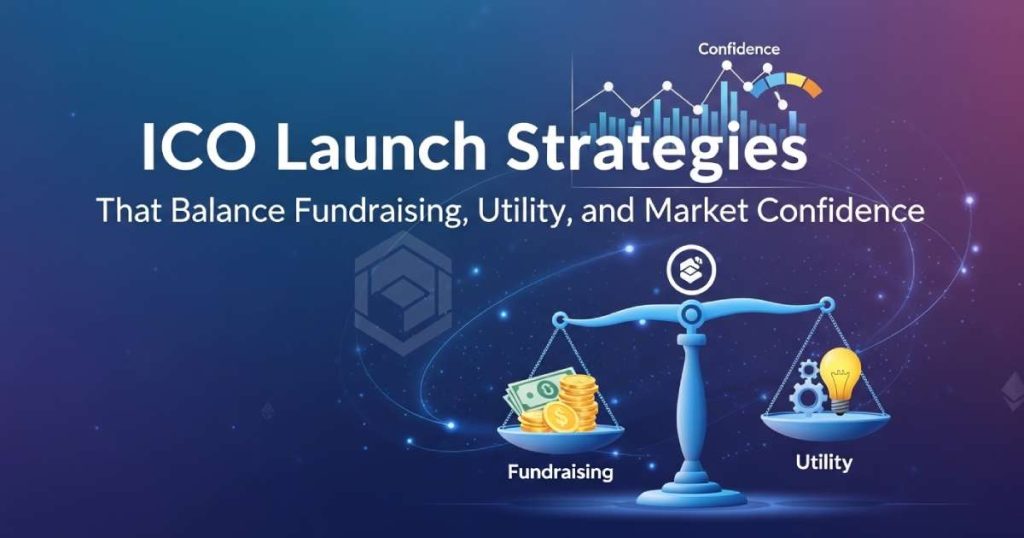
A successful ICO today sits at the intersection of three forces that must work together from the very beginning: fundraising efficiency, meaningful token utility, and sustained market confidence. When one of these is missing, the entire launch weakens. Projects that focus only on funding often struggle post-launch, while those that emphasize utility without proper capital planning fail to scale. The real challenge lies in aligning all three into a single, coherent strategy.
Understanding the Modern ICO Landscape
The ICO model has evolved into something far more disciplined than its earlier form. Projects now operate in an environment where investors compare multiple opportunities at once, track on-chain data, and validate claims through community signals before making decisions.
This shift has changed how launches are evaluated. A token is no longer judged only by its concept or branding but by how clearly it fits into an ecosystem that users can understand and participate in. The presence of structured tokenomics, transparent allocation, and realistic roadmap timelines often carries more weight than aggressive marketing campaigns.
At the same time, regulatory awareness has increased across major regions. Even when projects are not directly bound by strict frameworks, they are expected to follow compliance-aware practices such as KYC-integrated participation, controlled messaging, and jurisdiction-sensitive campaigns. This layer adds complexity but also contributes to long-term credibility.
Why Balance Matters More Than Speed
Speed is often mistaken for momentum during ICO launches, especially when projects aim to raise funds quickly with the support of an experienced ICO development company. A fast sellout may create temporary excitement, but it does not guarantee long-term stability. In many cases, rapid fundraising without a strong foundation leads to immediate sell pressure once tokens become tradable.
A balanced approach, on the other hand, focuses on sustainable participation. It aligns token distribution with actual usage, ensures that early contributors have reasons to stay engaged, and builds a market structure that supports gradual growth rather than short-lived spikes.
The difference becomes visible after listing. Projects that prioritize balance tend to maintain steady activity across trading, community engagement, and product development. Those that prioritize speed often experience sharp declines in both price and attention within weeks of launch.
Designing Token Utility That Supports Real Usage
Moving Beyond Generic Utility
One of the most common reasons ICOs fail to maintain interest is weak or interchangeable token utility. Terms like governance or rewards are frequently used without clearly explaining how they function within the ecosystem.
A well-designed token utility connects directly to actions users already want to perform. It becomes part of the system’s natural flow rather than an added feature. This requires a deeper understanding of user behavior and platform mechanics before defining the token’s role.
For example, in a decentralized finance platform, the token might be tied to collateral requirements, fee reductions, or liquidity incentives that influence how users interact with the protocol. In a gaming environment, it could be linked to asset ownership, progression systems, or marketplace transactions. The key is that removing the token would disrupt the system, not leave it unaffected.
Aligning Utility With Value Flow
Utility must also reflect how value moves through the ecosystem. When users engage with the platform, the token should capture part of that activity in a way that feels logical and consistent.
This alignment often includes:
- Transaction-based usage where the token is required for fees or access
- Incentive mechanisms that reward participation without creating unsustainable emissions
- Access-based models where holding the token unlocks features or opportunities
When these elements are connected properly, the token becomes more than a tradable asset. It becomes a functional component that supports both user activity and economic balance.
Structuring Tokenomics for Stability and Growth
Tokenomics plays a central role in how an ICO performs both during and after the fundraising phase. Poorly structured allocations or unrealistic vesting schedules can create immediate market pressure, regardless of how strong the project itself may be.
Distribution That Reflects Participation
A healthy token distribution ensures that supply is aligned with actual contributors rather than concentrated in a few segments. Public allocation should be meaningful enough to create broad participation, while team and advisor allocations must be structured with clear vesting to avoid early sell-offs.
The goal is to create a distribution pattern where no single group has disproportionate influence over price movement, especially during the early stages of trading.
Vesting That Supports Market Confidence
Vesting schedules are often underestimated, yet they play a direct role in shaping investor behavior. Short or poorly communicated vesting periods can lead to uncertainty, even if the underlying project is strong.
Longer, transparent vesting schedules signal commitment and reduce immediate selling pressure. They also help align the interests of the team, early investors, and the broader community.
Managing Supply Dynamics
Supply management extends beyond initial distribution. It includes how tokens enter circulation over time and how the ecosystem handles growth.
Projects that introduce tokens gradually, based on usage or milestones, tend to maintain better price stability. Sudden increases in circulating supply, especially without corresponding demand, often lead to volatility that is difficult to recover from.
Building Fundraising Strategies That Attract the Right Participants
Quality Over Quantity in Investor Selection
Not all capital contributes equally to a project’s success. Strategic participants who understand the product, engage with the community, and support long-term growth often provide more value than large but passive investors.
This perspective shifts the focus from raising the highest possible amount to attracting the right mix of contributors. It encourages projects to design fundraising phases that prioritize alignment rather than speed.
Structuring Multi-Phase Sales
A well-planned ICO typically includes multiple phases, each serving a specific purpose within the broader strategy.
Early phases may involve private or strategic rounds that bring in experienced participants. Public phases open access to a wider audience, creating visibility and community involvement. Each phase must be structured with pricing and allocation that reflects its role without creating imbalances.
When executed properly, multi-phase sales create a layered participation model where different groups contribute at different stages, supporting both funding and market stability.
Pricing That Reflects Market Reality
Pricing decisions have long-term consequences. Tokens that are priced too low during early rounds may attract speculative behavior, while overly high valuations can limit participation and reduce post-launch activity.
Balanced pricing considers both the current market environment and the project’s actual stage of development. It aims to create a fair entry point that encourages participation without setting unrealistic expectations.
Establishing Market Confidence Before Listing
Transparent Communication
Market confidence begins before the token is even tradable. Clear communication about the project’s goals, progress, and limitations helps build trust among potential participants.
This includes detailed documentation, consistent updates, and realistic timelines. Overpromising may generate short-term interest, but it often leads to long-term credibility issues when expectations are not met.
Community as a Confidence Indicator
Community behavior has become a key signal in evaluating ICOs. Active, engaged communities often reflect genuine interest, while inactive or artificially inflated groups raise concerns.
Building a strong community involves more than increasing follower counts. It requires meaningful interaction, consistent engagement, and a clear connection between the project and its audience.
Preparing for Post-Launch Activity
Confidence is also influenced by what happens immediately after listing. Projects that plan for post-launch activity, including liquidity support, ongoing communication, and product updates, are better positioned to maintain momentum.
Without this preparation, even well-funded ICOs can struggle to sustain interest once initial excitement fades.
Strengthening Post-Launch Strategy to Sustain Momentum
A well-executed ICO does not end at fundraising. In many cases, the real test begins after the token becomes tradable. Projects that fail to plan beyond the launch phase often experience a drop in engagement, liquidity, and overall market interest.
Post-launch strategy should begin well before the ICO concludes. It must account for how users will continue interacting with the ecosystem once the initial excitement fades. This includes consistent product updates, ongoing communication, and clear milestones that keep participants involved.
Maintaining momentum requires continuity. The same channels used during the ICO, including social platforms, community groups, and content distribution, should continue to operate with purpose. Activity should not feel like a campaign that ended but rather an ecosystem that is evolving.
Integrating Liquidity and Market Support Early
Liquidity planning is often treated as a technical step that happens just before listing. In reality, it plays a central role in shaping early market behavior and investor perception.
A token entering the market without sufficient liquidity creates friction for both buyers and sellers. This leads to volatility, inconsistent pricing, and reduced confidence among participants. Projects that integrate liquidity strategy early are better positioned to create stable trading conditions.
This includes:
- Allocating sufficient tokens for liquidity pools without compromising long-term supply balance
- Selecting appropriate exchanges based on target audience and token type
- Coordinating initial trading activity to avoid sudden price swings
Liquidity is not only about enabling trading. It reflects how prepared a project is to operate in a live market environment.
Aligning Marketing With Product and Utility
Marketing during an ICO often focuses on visibility, but long-term success depends on how well that visibility connects with actual product value. Campaigns that generate attention without reinforcing utility tend to attract short-term participants rather than committed users.
A stronger approach integrates marketing with product development. Messaging should reflect real features, use cases, and progress rather than abstract promises. This alignment ensures that expectations set during the ICO remain consistent after launch.
Content That Reinforces Utility
Content should explain how the token functions within the ecosystem in clear and practical terms. Instead of broad statements, it should show real scenarios where users interact with the platform.
For example, walkthroughs, use-case demonstrations, and product updates help bridge the gap between concept and execution. They give users a reason to stay engaged beyond speculation.
Community Interaction That Builds Retention
Community management must shift from awareness to retention after launch. Discussions should move toward product usage, feedback, and ongoing participation rather than purely promotional updates.
This transition helps convert early supporters into active contributors who influence the ecosystem’s growth.
Managing Expectations and Market Behavior
Market confidence is closely tied to how expectations are set and managed. Projects that create unrealistic narratives during the ICO phase often face challenges once actual performance becomes visible.
A more sustainable approach involves setting achievable milestones and communicating progress transparently. This builds a relationship where participants understand both the opportunities and the limitations of the project.
Avoiding Overvaluation Traps
Overvaluation during the ICO phase can create pressure that is difficult to sustain. When initial valuations do not match product maturity or market demand, the token may struggle to maintain its position after listing.
Balanced valuation considers:
- Current development stage
- Comparable projects within the market
- Realistic adoption timelines
This approach reduces the gap between expectation and reality, making it easier to maintain confidence over time.
Encouraging Long-Term Participation
Retention strategies should be built into the ecosystem from the beginning. Mechanisms such as staking, governance participation, or access-based benefits can encourage users to remain involved.
These mechanisms must be designed carefully to avoid unsustainable reward structures. The focus should remain on meaningful engagement rather than short-term incentives.
Leveraging Data and Feedback for Continuous Improvement
ICO launches generate valuable data across multiple channels, including user behavior, transaction patterns, and community activity. Projects that actively analyze this data can refine their strategies and adapt to changing conditions.
Feedback loops should be established early. Community insights, user feedback, and performance metrics can highlight areas that require adjustment. This iterative approach allows the project to evolve in response to real-world usage rather than relying solely on initial assumptions.
Continuous improvement is not a separate phase but an ongoing process that supports both product development and market positioning.
Positioning for Long-Term Ecosystem Growth
A successful ICO should serve as the foundation for a broader ecosystem rather than a standalone event. The strategies implemented during launch must align with long-term goals, including expansion, partnerships, and product evolution.
Expanding Utility Over Time
Utility should not remain static. As the platform grows, new features, integrations, and use cases can increase the token’s relevance. This gradual expansion supports sustained demand and keeps the ecosystem dynamic.
Building Strategic Partnerships
Partnerships can extend the reach and functionality of the ecosystem. Whether through integrations, collaborations, or shared initiatives, they contribute to both visibility and practical utility.
The key is to ensure that partnerships add real value rather than serving only as promotional announcements.
Strengthening Governance Structures
As the project matures, governance mechanisms can play a larger role in shaping its direction. Allowing the community to participate in decision-making increases engagement and aligns incentives across stakeholders.
Governance must be introduced gradually, with clear frameworks that maintain stability while enabling participation.
Conclusion
ICO launches have moved beyond simple fundraising events. They now represent the starting point of a complex system where capital, utility, and market behavior must align from the very beginning.
Projects that succeed in this environment are those that approach ICOs as structured strategies rather than isolated campaigns. They design token utility around real user actions, build tokenomics that support stability, and create fundraising models that attract aligned participants.
Market confidence, in this context, is not created through visibility alone. It develops through consistency, transparency, and the ability to deliver on expectations over time.
Balancing fundraising, utility, and confidence is not a one-time effort. It requires continuous alignment as the project evolves. When done correctly, it transforms an ICO from a short-term milestone into a foundation for long-term growth.