Launching an ICO today involves far more than writing a whitepaper and opening a token sale. The expectations have shifted. Investors look for structure, credibility, compliance awareness, and a clear path from concept to real market activity. At the same time, competition has increased, with thousands of tokens competing for attention across multiple chains and platforms.
This is where end-to-end ICO development becomes important. Instead of handling pieces in isolation, projects now need a coordinated approach that connects strategy, technology, legal alignment, and market readiness. When these elements come together properly, the transition from idea to token launch feels structured rather than uncertain.
This guide walks through the full lifecycle of ICO development, focusing on what actually matters at each stage and how teams can move from concept to market entry without common setbacks.
Understanding What End-to-End ICO Development Really Covers
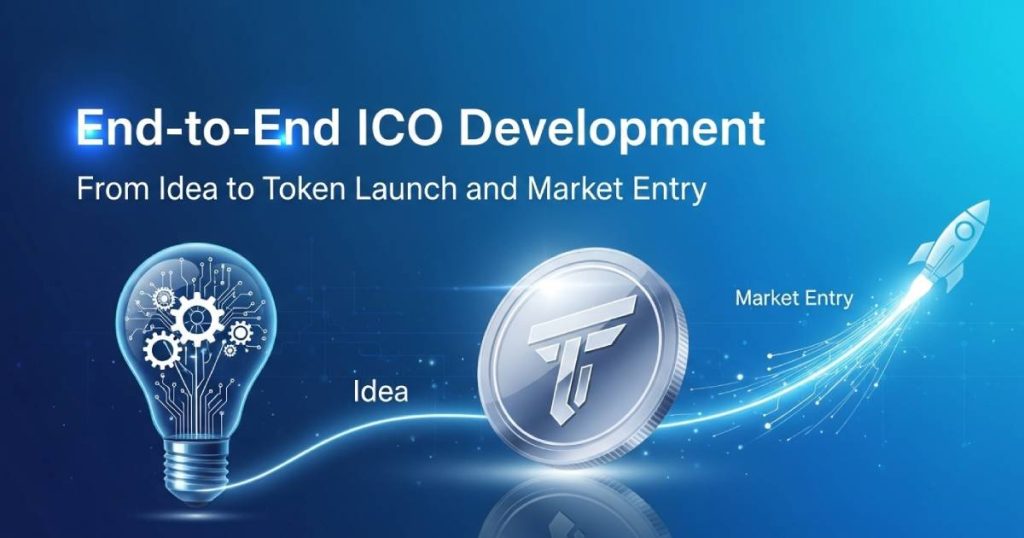
End-to-end ICO development refers to the complete process of planning, building, launching, and scaling a token sale. It connects multiple disciplines into a single execution path.
At a high level, this includes:
- Concept validation and market positioning
- Tokenomics design and structuring
- Smart contract development and auditing
- ICO platform and dashboard creation
- Legal and compliance preparation
- Marketing and community building
- Token Generation Event execution
- Exchange listing and post-launch growth
Each of these stages influences the next. A weak foundation in one area often shows up later during fundraising or after listing, which is why a structured approach is critical.
Phase 1: Validating the Idea and Market Fit
Before any technical development begins, the project itself needs clarity. This is where many ICOs struggle, not because of poor technology, but because the underlying idea lacks direction or differentiation.
Defining the Core Value Proposition
A strong ICO starts with a clear answer to a simple question: what does this token actually enable?
Projects that perform well usually have one or more of the following:
- A defined utility within a platform or ecosystem
- A clear user base with a real need
- A measurable advantage over existing solutions
Without this clarity, even well-funded campaigns tend to lose momentum after launch.
Understanding the Competitive Landscape
The crypto market moves quickly, and similar ideas often emerge at the same time. Conducting a detailed competitor analysis helps identify:
- What existing projects are doing well
- Where users feel friction
- Gaps that your project can realistically fill
This stage also shapes how the project positions itself during marketing and fundraising.
Phase 2: Designing Tokenomics That Hold Up After Launch
Tokenomics is often treated as a technical detail, but in reality, it directly affects how the market responds to the token.
Key Components of Tokenomics
A well-structured token model typically includes:
- Total supply and emission schedule
- Allocation across investors, team, ecosystem, and reserves
- Vesting periods and lock-up conditions
- Utility mechanisms within the platform
- Incentives for long-term participation
Each of these elements influences price stability, liquidity, and user behavior.
Avoiding Common Tokenomics Pitfalls
Many projects only realize tokenomics issues after trading begins. Some common problems include:
- Large token unlocks shortly after launch, leading to selling pressure
- Over-allocation to early investors, creating imbalance
- Lack of clear utility, reducing long-term demand
A balanced approach ensures that early supporters, the team, and the broader community all benefit from sustained growth rather than short-term movement.
Phase 3: Building the Technical Foundation
Once the concept and token structure are finalized, development begins. This phase focuses on creating the infrastructure that powers the ICO.
Smart Contract Development
Smart contracts handle token creation, distribution, and fundraising logic. They define:
- How tokens are minted and transferred
- How funds are collected during the ICO
- How vesting and distribution are enforced
Accuracy here is critical. Even minor errors can lead to financial loss or security risks.
Security Audits and Testing
Before deployment, contracts should undergo thorough testing and independent audits. This builds trust and reduces the risk of vulnerabilities.
Investors today actively look for audit reports before participating in a token sale, making this step non-negotiable.
ICO Platform Development
The ICO platform acts as the user interface for investors. It typically includes:
- Investor dashboard
- Token purchase interface
- Wallet integration
- Real-time progress tracking
- KYC and verification modules
A well-designed platform makes participation straightforward, which directly impacts conversion rates during the sale.
Phase 4: Legal Structuring and Compliance Alignment
Regulatory expectations around ICOs have become more defined across different regions. While requirements vary, ignoring compliance is no longer an option.
Structuring the Token Legally
Projects need to determine how their token is classified. This can influence:
- Whether the token is treated as a utility or security
- What disclosures are required
- Which jurisdictions are accessible
Legal clarity helps avoid restrictions or complications later during exchange listings.
Implementing KYC and AML Processes
Know Your Customer and Anti-Money Laundering processes are now standard in most ICOs. These systems:
- Verify participant identity
- Reduce fraudulent activity
- Support regulatory alignment
For investors, this also adds a layer of trust, especially in larger fundraising rounds.
Phase 5: Building Awareness Before the ICO Launch
Even the most well-prepared ICO can struggle without visibility. Pre-launch marketing sets the foundation for participation during the token sale.
Community Development
Communities play a central role in crypto projects. Building an active presence across platforms helps:
- Create early interest
- Answer questions directly
- Build credibility through engagement
Organic discussions often influence investor decisions more than paid campaigns.
Strategic Marketing Channels
A balanced marketing approach typically includes:
- Content marketing and thought leadership
- Influencer and KOL collaborations
- Social media campaigns
- PR and media coverage
- Airdrops and early participation programs
The goal is not just reach, but meaningful engagement that carries into the ICO phase.
Phase 6: Executing the Token Sale
The Token Generation Event is where all preparation comes together. This stage determines how effectively the project converts interest into actual participation.
Structuring the ICO Phases
Most ICOs include multiple stages, such as:
- Private sale
- Pre-sale
- Public sale
Each phase may have different pricing, allocation limits, and access conditions. Structuring these stages properly helps manage demand and maintain momentum.
Managing Real-Time Activity
During the ICO, teams need to actively monitor:
- Participation levels
- Transaction flow
- Community feedback
- Technical performance of the platform
Quick responses to issues or questions can significantly impact overall results.
Phase 7: Preparing for Market Entry
The ICO does not end with token distribution. In many ways, the real challenge begins once the token enters the open market.
Exchange Listing Strategy
Listing the token on exchanges increases accessibility and liquidity. This involves:
- Selecting the right mix of centralized and decentralized exchanges
- Preparing listing documentation
- Coordinating liquidity and trading pairs
The timing and choice of exchange can influence early price behavior and visibility.
Liquidity Planning
Without sufficient liquidity, even strong projects can face unstable trading conditions. Planning includes:
- Initial liquidity pool allocation
- Market-making strategies
- Gradual release of tokens into circulation
A structured approach helps avoid sharp volatility immediately after listing.
Phase 8: Post-Launch Growth and Ecosystem Development
After market entry, the focus shifts toward sustaining activity and building long-term value.
Maintaining Community Engagement
Consistent communication keeps the community involved. This includes:
- Regular updates on development progress
- Transparent reporting
- Interactive sessions and announcements
Active communities often act as the strongest growth drivers.
Expanding Utility and Adoption
For a token to hold relevance, its use within the ecosystem must grow over time. This can involve:
- Platform integrations
- Partnerships
- Feature expansions
Tokens that remain static after launch often struggle to maintain interest.
Advanced Strategies, Real-World Insights, and the Role of an ICO Development Company
Moving beyond the foundational stages, successful ICOs often stand out because of how they execute after the basics are in place. This section focuses on practical strategies, real-world patterns, and how structured support can influence outcomes at scale.
Learning from Real-World ICO Outcomes
Looking at past ICOs, both successful and unsuccessful, reveals consistent patterns. Projects that sustained momentum did not rely on hype alone. They built a combination of credibility, usability, and timing.
What Successful ICOs Tend to Do Differently
Projects that manage to raise funds and maintain traction usually show:
- A working prototype or MVP before the token sale
- Transparent communication with regular updates
- Clear use of funds rather than vague roadmaps
- Strong community interaction rather than one-way promotion
For example, platforms in DeFi and infrastructure categories often gain traction early because users can directly interact with the product, not just speculate on its future.
Where Many ICOs Fall Short
On the other side, underperforming ICOs often face similar issues:
- Overpromising without technical backing
- Weak or delayed communication during the sale
- Lack of clarity around token utility
- Poor planning for post-launch activity
These issues rarely appear during the initial excitement phase. They become visible only when the token enters open trading and user expectations shift.
Advanced Tokenomics Strategies for Long-Term Stability
Basic tokenomics may define supply and allocation, but advanced structuring focuses on how the token behaves over time.
Dynamic Vesting Models
Instead of fixed unlock schedules, some projects introduce conditional vesting. For example:
- Tokens unlock based on milestone completion
- Gradual release tied to platform usage
- Performance-based incentives for contributors
This reduces sudden selling pressure and aligns rewards with actual progress.
Utility Expansion Beyond the ICO
Tokens that maintain relevance usually expand their use cases over time. This may include:
- Governance participation
- Access to premium features
- Fee discounts within the platform
- Staking and reward mechanisms
The idea is to keep demand linked to activity rather than speculation alone.
The Role of Data and Analytics in ICO Campaigns
ICO marketing and decision-making have become more data-driven. Teams now track multiple indicators to adjust strategies in real time.
Key Metrics That Matter
Instead of focusing only on funds raised, teams monitor:
- Conversion rates from website visitors to investors
- Community growth and engagement levels
- Token distribution patterns during the sale
- Retention of participants after the ICO
These insights help refine campaigns while they are still active, rather than reacting after the sale ends.
Using AI and Automation
AI tools are increasingly used to:
- Analyze investor sentiment across platforms
- Identify high-intent audiences
- Optimize ad campaigns and messaging
- Automate community responses without losing consistency
This reduces manual effort while improving targeting accuracy.
Structuring a Strong Exchange Listing Plan
Exchange listing is often treated as a final step, but in reality, it requires preparation well before the ICO begins.
Choosing Between CEX and DEX Listings
Both centralized and decentralized exchanges offer different advantages.
Centralized exchanges provide:
- Higher visibility and credibility
- Access to a broader user base
- Structured trading environments
Decentralized exchanges offer:
- Faster listing timelines
- Greater control over liquidity
- Direct access to on-chain users
A balanced approach often works best, combining early DEX listings with later CEX expansion.
Timing the Listing Correctly
Listing too early can lead to volatility due to incomplete ecosystem development. Listing too late can reduce momentum built during the ICO.
The goal is to align listing with:
- Product readiness
- Community strength
- Market conditions
Managing Post-Launch Market Behavior
Once the token is live, price movement becomes visible to everyone. This phase requires careful handling to avoid sudden instability.
Market-Making and Liquidity Support
Structured market-making helps:
- Maintain consistent order books
- Reduce large price swings
- Improve trading experience for users
This does not mean controlling price direction, but ensuring smooth trading conditions.
Communication During Volatility
Market fluctuations are common after listing. How the team communicates during this period matters more than the price itself.
Clear updates about:
- Development progress
- Upcoming features
- Partnerships
can help maintain confidence even during uncertain periods.
How an ICO Development Company Supports the Full Lifecycle
While some teams attempt to manage everything internally, many rely on an ICO development company to handle execution across multiple stages.
Strategic Planning and Structuring
At the early stage, experienced teams help:
- Refine the project concept
- Align tokenomics with market expectations
- Plan the fundraising structure
This reduces the risk of structural issues later.
Technical Development and Security
Development teams focus on:
- Smart contract creation and testing
- Platform development
- Security audits and compliance integration
This ensures that the technical foundation is stable before the ICO goes live.
Marketing and Investor Outreach
An ICO development company often supports:
- Campaign planning and execution
- Community management
- Influencer and PR coordination
This helps maintain consistent messaging across channels.
Exchange Listing and Post-Launch Support
After the ICO, support typically extends to:
- Exchange negotiations and listings
- Liquidity planning
- Ongoing marketing and growth strategies
This continuity is important because many projects struggle after the initial fundraising phase.
Common Mistakes to Avoid in End-to-End ICO Development
Even with strong planning, certain mistakes appear frequently across projects.
Rushing the Launch Timeline
Trying to move too quickly often leads to:
- Incomplete technical testing
- Weak marketing preparation
- Limited community engagement
A slightly delayed but well-prepared launch usually performs better than a rushed one.
Ignoring Post-ICO Planning
Some projects focus entirely on fundraising without considering what happens next. This results in:
- Loss of community interest
- Reduced trading activity
- Difficulty maintaining relevance
Planning beyond the ICO is essential for long-term success.
Overcomplicating the Token Model
Complex tokenomics may look impressive but can confuse users. Simplicity with clarity often works better than layered structures that are hard to understand.
Final Thoughts on Building a Sustainable ICO
End-to-end ICO development is ultimately about coordination. Each stage, from idea validation to post-launch growth, needs to connect logically with the next.
Projects that treat ICOs as short-term fundraising events often struggle once market conditions change. Those that approach it as the beginning of a long-term ecosystem tend to build stronger communities and more stable token economies.
Careful planning, realistic expectations, and consistent execution make a noticeable difference. When these elements are in place, the transition from concept to market presence becomes more predictable and manageable.