Introduction
Launching a crypto token in 2026 is no longer a simple process of deploying a smart contract and opening a presale. The market has matured, users are more cautious, and regulators are paying closer attention to how tokens are designed, distributed, and promoted. Entrepreneurs who succeed today approach token launches as structured product rollouts rather than one-time fundraising events.
What makes the difference now is not just technical execution but how clearly the token fits into a working system. A token needs a defined role, a believable path to adoption, and a release strategy that avoids short-term volatility. Without these elements, even well-funded projects struggle to maintain traction after launch.
This guide walks through how entrepreneurs move from an early idea to a live token in the market, focusing on the stages that matter most in 2026 and the decisions that shape long-term outcomes.
Understanding What a Crypto Token Represents Today
Before getting into execution, it helps to reset how tokens are viewed in the current market.
A few years ago, tokens were often treated as speculative instruments. Today, they are expected to function as part of a working system. Whether the project is in DeFi, gaming, real estate tokenization, or AI-driven platforms, the token must connect directly to how users interact with the product.
Entrepreneurs now design tokens around utility flows instead of narratives. That shift changes everything from tokenomics to marketing.
A token typically falls into one or more of these categories:
- Access-based tokens that unlock features or services
- Payment tokens used within a platform ecosystem
- Governance tokens that influence decisions
- Reward tokens tied to user participation
- Collateral or staking tokens in financial systems
What matters is not the category itself but how naturally the token integrates into real user behavior. If users have to be convinced to use the token, adoption slows down. If they rely on it as part of their normal activity, the token gains relevance.
From Idea to Structure: Defining the Token’s Role
Turning a Concept Into a Functional Model
Every token launch starts with an idea, but not every idea is ready for a token.
Entrepreneurs who approach token development services carefully spend time mapping how the token fits into the platform before writing a single line of code. This includes understanding who the users are, what actions they take, and where the token becomes necessary.
A strong starting point is to outline the user journey:
- How users enter the platform
- What actions they take regularly
- Where value is exchanged
- How incentives influence behavior
This exercise often reveals whether a token is actually needed or if traditional payment methods would work better.
Avoiding Forced Token Design
One of the most common mistakes in 2026 is forcing a token into a system where it does not belong.
For example, adding a token purely for fundraising can create friction later. Users may ignore it, or worse, treat it only as a tradable asset rather than part of the platform.
Entrepreneurs who succeed tend to build the product logic first and introduce the token where it naturally supports that logic.
Tokenomics Planning That Reflects Real Usage
Why Tokenomics Still Determines Market Behavior
Tokenomics is often discussed in terms of supply and allocation, but its real impact shows up in how the market behaves after launch.
A token with a poorly planned release schedule can experience sharp price movements, even if the underlying product is strong. On the other hand, a well-structured distribution can stabilize early trading and build confidence among participants.
Key Elements Entrepreneurs Focus On
Instead of treating tokenomics as a checklist, founders now approach it as a behavioral model.
Circulating supply at launch
A limited circulating supply can create initial demand, but if too much is locked without a clear release plan, it leads to volatility when tokens unlock.
Allocation balance
The split between public sale, team, ecosystem, and treasury needs to reflect long-term goals. Over-allocation to insiders often signals risk to the market.
Vesting schedules
Gradual release aligned with product growth helps reduce sudden sell pressure and builds trust.
Utility-driven demand
Token demand should come from usage, not just speculation. For example, staking rewards tied to platform activity or transaction-based demand can support ongoing engagement.
Example of Practical Tokenomics Thinking
In gaming ecosystems, tokens are often earned through gameplay and spent within the platform. In DeFi platforms, tokens may be used for liquidity provision or governance decisions.
In both cases, the token moves because users are active, not because the project is promoting it. That distinction is what separates sustainable token economies from short-lived hype cycles.
Choosing the Right Blockchain for Launch
Matching Technology With Product Needs
Selecting a blockchain is one of the earliest technical decisions entrepreneurs make, and it directly affects user experience, cost, and scalability.
In 2026, the decision is less about popularity and more about alignment with the product’s requirements.
Some common considerations include:
Transaction costs
High fees can discourage frequent user interaction, especially in gaming or micro-transaction environments.
Speed and throughput
Platforms with high user activity need fast confirmation times to maintain smooth interaction.
Ecosystem compatibility
Wallet support, developer tools, and integration options influence how easily users can adopt the platform.
Common Blockchain Choices
Ethereum remains a strong choice for projects that require deep ecosystem integration and institutional credibility. However, its cost structure makes it less suitable for high-frequency interactions without scaling solutions.
BNB Chain is often selected for projects targeting a broader retail audience due to lower fees and simpler onboarding.
Solana continues to attract projects that rely on high-speed transactions, particularly in gaming and real-time applications.
Polygon and Base offer alternatives for teams looking to stay connected to the Ethereum ecosystem while reducing costs.
Entrepreneurs often work with a cryptocurrency development company at this stage to evaluate trade-offs and ensure the chosen network supports both current needs and future growth.
Smart Contract Development and Security
Building the Core Infrastructure
Once the structure is defined, the focus shifts to development.
Smart contracts form the backbone of any token project. They control supply, transactions, staking mechanisms, and sometimes governance logic. Errors at this stage can have lasting consequences.
Entrepreneurs now prioritize modular contract design, allowing updates and upgrades without disrupting the entire system.
Security as a Non-Negotiable Factor
Security expectations have increased significantly. Users and investors look for audited contracts before participating in any token launch.
A typical security approach includes:
- Internal testing and code reviews
- Third-party smart contract audits
- Bug bounty programs to identify vulnerabilities
- Continuous monitoring after deployment
Projects that skip or rush this process often face credibility issues, even if no immediate problems occur.
Pre-Launch Preparation That Shapes First Impressions
Building Awareness Before the Token Goes Live
In earlier cycles, projects could launch with minimal preparation and rely on market excitement. That approach no longer works.
Entrepreneurs now invest in pre-launch positioning to ensure that when the token goes live, there is already an audience that understands the project.
This includes:
Content development
Clear explanations of the product, token role, and roadmap help potential users and investors evaluate the project.
Community building
Platforms like Discord, Telegram, and social media channels are used to create early engagement and gather feedback.
Partnership development
Collaborations with other projects or platforms can expand reach and add credibility.
Aligning Messaging With Reality
One noticeable shift in 2026 is the reduction of exaggerated claims.
Users have become more selective, and overpromising often leads to skepticism. Entrepreneurs who present realistic timelines and transparent goals tend to build stronger trust.
Structuring the Token Sale or Distribution Model
Moving Beyond Traditional ICO Models
The way tokens are distributed has evolved significantly.
While ICOs are still used, many projects explore alternative models such as:
- Private and strategic funding rounds
- IDOs on decentralized launchpads
- Community-based distributions through airdrops
- Fair launch models with minimal pre-allocation
Each approach comes with trade-offs in terms of control, distribution fairness, and market perception.
Balancing Accessibility and Stability
A widely accessible token sale can attract a large number of participants, but it also introduces volatility if early holders sell quickly.
Entrepreneurs often combine different methods to balance accessibility with long-term stability. For example, they may allocate a portion for public participation while locking larger allocations for gradual release.
Preparing for Exchange Listings and Market Entry
Why Listings Still Matter
Even though decentralized trading has become more accessible, exchange listings remain a key milestone.
Listings provide visibility, liquidity, and credibility. However, they also introduce new dynamics, such as price discovery and market speculation.
Planning Listings Strategically
Entrepreneurs typically approach listings in stages:
- Initial liquidity on decentralized exchanges
- Gradual expansion to centralized exchanges
- Market-making strategies to maintain liquidity
The timing of these steps can influence how the token performs in its early days.
Transitioning From Launch to Active Market
The Shift From Promotion to Participation
Once the token is live, the focus shifts from attracting attention to sustaining activity.
Projects that rely only on marketing tend to lose momentum quickly. Those that focus on user engagement and product usage are more likely to retain interest.
Examples of post-launch engagement include:
- Incentive programs tied to real usage
- Feature releases that expand utility
- Governance participation opportunities
The goal is to keep the token moving within the ecosystem rather than relying on external trading alone.
Navigating Regulations and Compliance in 2026
Why Compliance Shapes Launch Outcomes
As token launches became more structured, regulatory expectations followed closely. In 2026, ignoring compliance is not just risky; it can limit exchange listings, restrict user access, and reduce investor confidence.
Entrepreneurs now treat compliance as part of product design rather than a legal formality added later. This shift changes how tokens are categorized, marketed, and distributed.
Different regions approach crypto differently. Some treat tokens as utilities, while others classify them under securities frameworks depending on how they are structured and promoted. This means founders need clarity on what their token represents before engaging users or investors.
Practical Steps Founders Take
Most teams begin by working with legal advisors to assess whether their token could fall under securities regulations. This assessment influences how fundraising is structured and who can participate.
Key considerations include:
- Whether the token represents ownership or profit-sharing
- How the token is marketed to potential buyers
- Whether there are expectations of returns tied to the project
- Jurisdiction-specific requirements for KYC and AML
Many projects now integrate KYC processes into token sales, especially for private rounds or regulated offerings. While this adds friction, it also improves credibility and reduces long-term risks.
Designing a Go-To-Market Strategy That Actually Works
Moving Beyond Hype-Driven Launches
Crypto marketing has changed significantly. Short bursts of attention no longer translate into sustained growth.
In 2026, successful launches are built on structured communication rather than viral spikes. Entrepreneurs focus on educating users before asking them to participate.
A strong go-to-market approach typically unfolds in phases:
Pre-launch phase
Focus on explaining the product, building community channels, and sharing consistent updates.
Launch phase
Introduce the token with clear instructions on participation, supported by transparent information about supply and distribution.
Post-launch phase
Shift attention toward product usage, updates, and ongoing engagement.
Building Trust Through Consistency
Users now evaluate projects based on how consistently they communicate.
Regular updates, visible progress, and open discussions help maintain credibility. Silence or irregular communication often leads to uncertainty, especially in the early stages.
Founders who stay actively involved in community discussions tend to build stronger relationships with early adopters.
Community Building as a Core Growth Driver
Why Community Is No Longer Optional
A token without an active community struggles to maintain relevance.
Community members are not just followers; they become users, contributors, and advocates. Their activity influences how the token circulates within the ecosystem.
Entrepreneurs now treat community building as an ongoing process rather than a pre-launch activity.
Creating Meaningful Engagement
Instead of focusing only on numbers, successful projects prioritize engagement quality.
Examples include:
- Hosting AMAs to answer user questions directly
- Running feedback sessions to improve the product
- Creating reward programs tied to real contributions
- Encouraging user-generated content and discussions
Communities that feel involved in the project’s growth are more likely to stay active over time.
Post-Launch Growth and Ecosystem Expansion
Extending Utility Beyond the Initial Launch
Once the token is live, growth depends on how the ecosystem evolves.
Entrepreneurs focus on expanding use cases gradually. Instead of launching everything at once, they introduce features in phases, allowing users to adapt and engage.
For example, a project might start with basic token transactions and later introduce staking, governance, or additional integrations.
Partnerships That Strengthen the Ecosystem
Collaborations play a major role in post-launch growth.
Partnerships with other platforms, service providers, or ecosystems can:
- Increase token utility
- Expand user reach
- Add new features or integrations
The key is to choose partnerships that align with the project’s long-term direction rather than short-term visibility.
Managing Liquidity and Market Behavior
Understanding Early Market Dynamics
The first few weeks after launch often define how the token is perceived.
Price volatility is common, but how the project responds can influence long-term confidence. Sudden drops without explanation can create panic, while transparent communication helps stabilize sentiment.
Approaches to Liquidity Management
Entrepreneurs use different strategies to manage liquidity and trading activity:
- Providing initial liquidity pools on decentralized exchanges
- Working with market makers for centralized exchange listings
- Encouraging organic trading through utility-driven demand
The goal is not to control the market but to create conditions where trading remains active and accessible.
Governance and Decentralization Over Time
Transitioning From Founder Control to Community Input
Many projects start with centralized decision-making to maintain speed and direction. Over time, they gradually introduce governance mechanisms.
This transition allows token holders to participate in decisions such as protocol updates, feature additions, or treasury usage.
Designing Governance That Works
Effective governance systems are simple enough for users to participate in but structured enough to prevent manipulation.
Common approaches include:
- Voting systems based on token holdings
- Delegated voting to experienced participants
- Proposal frameworks for structured decision-making
Entrepreneurs often introduce governance gradually, ensuring users understand how it works before giving full control.
Common Mistakes Entrepreneurs Still Make
Launching Without a Working Product
One of the recurring issues is launching a token before the platform is ready.
Without a usable product, the token becomes disconnected from real activity, leading to speculation-driven behavior and eventual decline in interest.
Overcomplicating Tokenomics
Complex token models may look appealing on paper but can confuse users.
Simple, transparent structures tend to perform better because users can understand how value moves within the system.
Ignoring Post-Launch Responsibilities
Some teams focus heavily on the launch phase and neglect what comes after.
In reality, post-launch activity determines whether the project continues to grow or fades away.
Misaligned Incentives
If incentives are not aligned with user behavior, the system becomes unstable.
For example, excessive rewards without corresponding utility can lead to inflation and reduced token value.
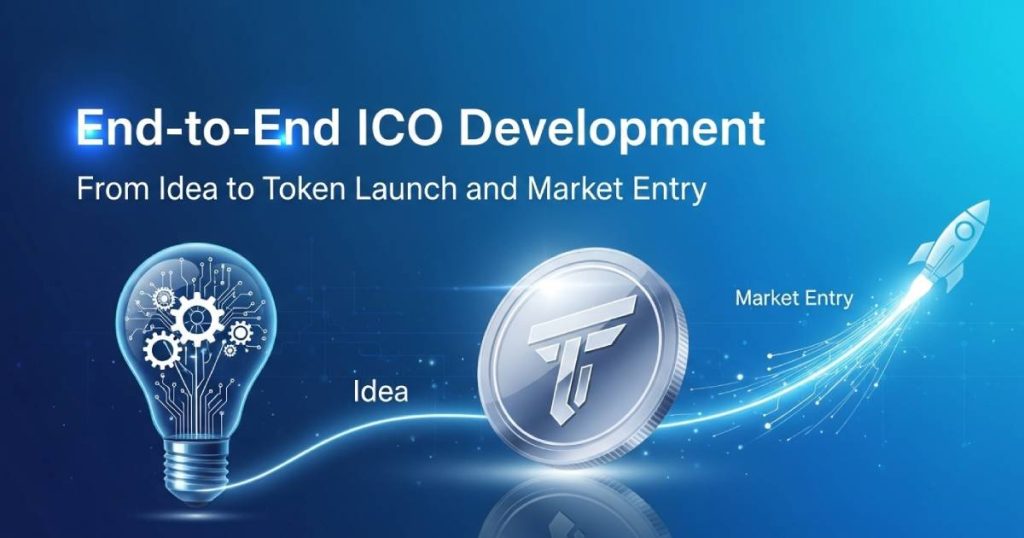
A Practical Timeline From Idea to Market
How the Process Typically Unfolds
While timelines vary, most successful token launches follow a structured progression:
Concept and validation
Define the idea, assess the need for a token, and map user behavior.
Token design and planning
Develop tokenomics, choose blockchain infrastructure, and outline technical requirements.
Development phase
Build smart contracts, test functionality, and conduct security audits.
Pre-launch preparation
Build community, develop content, and establish partnerships.
Token distribution
Execute the chosen sale or distribution model.
Market entry
List on exchanges, provide liquidity, and initiate trading.
Post-launch growth
Expand utility, engage users, and refine the ecosystem.
Entrepreneurs who follow a structured approach tend to avoid many of the pitfalls associated with rushed launches.
The Role of Strategic Partners in Token Launches
Why External Expertise Matters
Launching a token involves multiple areas of expertise, from development to legal compliance and marketing.
Many founders collaborate with specialized teams to manage these aspects effectively. A cryptocurrency development company often supports technical execution, while legal and marketing partners handle compliance and outreach.
Balancing Control and Collaboration
While external partners provide valuable support, founders still need to maintain control over the project’s direction.
Clear communication and defined responsibilities help ensure that all parts of the launch process stay aligned.
Conclusion
Launching a crypto token in 2026 is a structured, multi-stage process that goes far beyond technical deployment. Entrepreneurs who succeed treat it as a combination of product development, economic design, community building, and market strategy.
The journey from idea to market involves defining the token’s role, building secure infrastructure, preparing users before launch, and maintaining engagement after the token goes live. Each stage influences how the project is perceived and how the token performs over time.
What stands out in today’s market is the shift toward utility and transparency. Tokens that are tied to real usage, supported by clear communication, and backed by thoughtful planning are more likely to sustain momentum.
For entrepreneurs, the goal is not just to launch a token but to build a system where the token continues to move, evolve, and remain relevant as the ecosystem grows.